Are Life Experience Degrees Legitimate? How to Check
09
OCT
Are Life Experience Degrees Legitimate? How to Check
A "life experience degree" is a degree awarded for work history, training and skills instead of classroom study. Whether one is legitimate depends on a single question: is the institution awarding it accredited by an accreditor that the US Department of Education or the Council for Higher Education Accreditation recognizes? If yes, the degree is a real credential — usually a conventional degree where prior-learning credit shortened the program. If no, the document has no standing as a credential, no matter how the website describes it. This guide explains how to tell the two apart, what the common sales phrases actually mean, and where a novelty life experience diploma fits.
Two very different things share one name
1. Prior-learning assessment at an accredited school. Many accredited colleges let adult students earn credit for documented work experience, military training, professional licenses or exams — through portfolio review, challenge exams or recognized training evaluations. The credit shortens a degree; it does not replace it. The student still enrolls, still completes the remaining coursework, and the diploma is identical to any other graduate's. This is legitimate, and it is what "credit for life experience" means at a real university.
2. A degree sold on the basis of a résumé. Some websites offer a bachelor's, master's or doctorate "based on your life experience" in days, for a flat fee, with no coursework. The issuing "university" is typically unaccredited or accredited by an organization that is not itself recognized. This is the diploma-mill model, and the degree is not a credential — presenting it as one can have legal and employment consequences.
How to check whether a school is accredited
- Look the school up in a recognized database. The Council for Higher Education Accreditation (CHEA) and the US Department of Education both maintain lists of recognized accreditors and the institutions they accredit. If the school is not there, treat it as unaccredited.
- Check the accreditor, not just the claim. A school can truthfully say it is "accredited" by an organization that no recognized body has approved. CHEA's guidance on degree mills and accreditation mills explains how to spot this.
- Apply the Department of Education's warning signs. The Department's diploma-mills page lists them: degrees granted in days or weeks, fees charged per degree rather than per credit, no required coursework or interaction with faculty, degrees based solely on a résumé, and an address that is a mailbox.
What the sales phrases mean
- "Accredited life experience degree." Ask which accreditor. If it is not on the CHEA or Department of Education lists, the word "accredited" is doing no work.
- "With verification." This usually means the seller runs a website or phone line that will "confirm" the degree to anyone who asks. A legitimate verification comes from the school's own records office or from the National Student Clearinghouse — never from the seller.
- "Legal in all 50 states." Owning a piece of paper is legal. Using an unaccredited degree to obtain a job, a license or a government benefit is not, in a number of states.
- "Degree in 7 days." No accredited degree is awarded without assessed work, and prior-learning assessment at real schools takes weeks of documentation and review.
Where a novelty life experience diploma fits
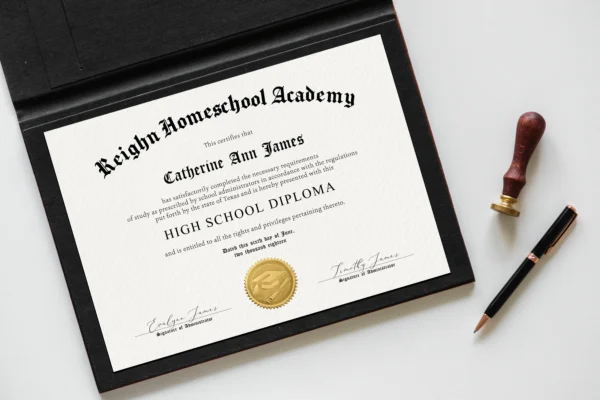
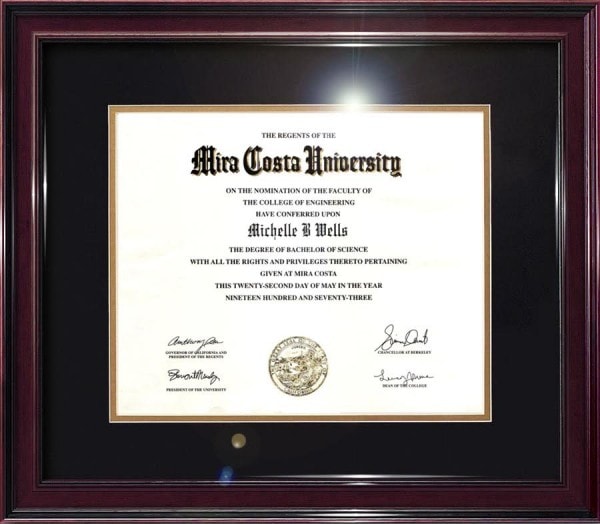
There is a third category that is neither of the two above: a novelty diploma that makes no claim of accreditation at all. It is a printed diploma that commemorates skills and experience — for a wall, a gift, a retirement joke, a prop — and it is sold as a novelty document, not as a credential. The difference from a diploma mill is honesty about what it is: a mill sells a fake credential and tells you it is real; a novelty replica is a display document that says so. We do not provide "verification" of any kind, we do not describe our documents as accredited, and the uses we decline are listed on Things We Can't Do. Readers who want the honest version of the "credit for experience" route can start with how to get college credit without attending class, and our earlier guide to life experience degrees online covers the novelty option in more detail.
A simple decision table
| You want… | Go to | Why |
|---|---|---|
| A real degree that recognizes your work history | An accredited college with a prior-learning assessment program | The credit is real and the diploma is a standard credential |
| Something to display that marks your experience | A novelty diploma, clearly labeled as such | No accreditation claim, no misrepresentation |
| A "degree" you can present as a real credential without study | Nowhere — this is the diploma-mill offer | Not a credential; using it as one carries real risk |
How prior-learning assessment works at a real college
If your goal is a legitimate degree that credits what you already know, the mechanism is called prior-learning assessment (PLA), and it takes four common forms:
- Standardized exams. CLEP and DSST exams test college-level knowledge in specific subjects; a passing score can earn three to six credits per exam at schools that accept them.
- Portfolio assessment. You document what you learned on the job — projects, training, supervisor letters — against the learning outcomes of a specific course, and faculty review it for credit.
- Evaluated training. Corporate and military training programs that have been reviewed for college-credit equivalency can transfer directly.
- Professional licenses and certifications. Some schools award credit for licenses (nursing, real estate, IT certifications) on the same basis.
Three things are always true at an accredited school: PLA credit is capped (often at a quarter to a half of the degree), it is awarded course by course against stated outcomes, and the student completes the remainder through enrolled coursework. The degree earned is the same degree everyone else receives — the diploma does not say "life experience" on it. That is the opposite of a mill, where the whole degree is "awarded" at once for a résumé and a fee.
What employers and licensing boards actually check
An employer who verifies education does not look at the diploma. They confirm the degree with the school's records office or through the National Student Clearinghouse, and licensing boards additionally check the institution's accreditation against the recognized lists. An unaccredited "life experience degree" fails at the second step even when the first step — the seller's own "verification" line — appears to pass. A number of states also make it an offense to use an unaccredited degree to obtain employment or a license, which is why the FTC's warning is addressed to buyers as much as to the sellers.
Frequently asked questions
Can a real university give me a bachelor's degree entirely from experience?
Not entirely. Accredited schools cap how much credit prior learning can earn; the rest is completed through coursework.
Are life experience degrees "accredited by the US Department of Education"?
The Department does not accredit schools; it recognizes accreditors. Any school claiming direct Department of Education accreditation is misstating how the system works.
Is a novelty life experience diploma the same as a diploma-mill degree?
No. A novelty diploma is sold and labeled as a display document. A mill sells a document while claiming it is a legitimate credential.
Sources
- CHEA — Important Questions About Degree Mills
- US Department of Education — Diploma Mills and Accreditation
- Federal Trade Commission — College Degree Scams