Buy a College Degree from a Real College? What You Can Order

27
FEB
Buy a College Degree from a Real College? What You Can Order
You cannot buy a college degree from a real college: a degree is earned, issued by the college and recorded in its files, and no seller can put you in those files. What can be ordered is a novelty replica of the college's diploma — the document, laid out from the school's own design, for display, gifts and props. On this site that is the Perfect Match Diploma. This guide separates the two so you know what is actually for sale.
What is, and is not, for sale
The degree itself: not for sale
A degree is the college's record that you completed its program. It lives in the records office, it is verified through the institution or the National Student Clearinghouse, and it cannot be bought. Sites that claim to sell an accredited degree from a real college for a fee are the subject of the Federal Trade Commission's guidance on degree scams, linked in the Sources below. If an offer says the college itself will issue or recognize the document, that is the claim to walk away from.
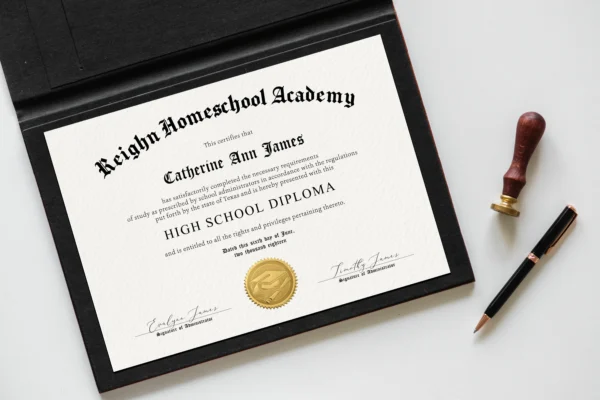
A replica of the college’s diploma: what that is
A Perfect Match Diploma is built from the school's real design — exact wording, fonts, spacing, leading and kerning — with your personal information embedded, drawn from a library of thousands of college and university designs; if the school is not on file, the maker finds it. It looks like the document the college prints, and that is the whole of what it is: a replica for display, gifts and props. The maker is not affiliated with any institution and does not make documents intended for misrepresentation. For the longer explanation of the phrase, see fake degree from a real university: what a replica really is.
If you earned the degree and lost the diploma
Then the college can reissue it. Contact the records office with the name you graduated under, the graduation year and an ID; the office matches you against its records and prints a new copy on its own schedule. A replica fills the frame while you wait, but the reissue is the only document that is actually the college's. The routes, and what each office needs from you, are in lost diploma replacement options.
What you enter and what you receive
On the Perfect Match order form you enter the school's full name, the complete degree title (for example, Bachelor of Science), your name as it should appear, your major and your graduation date, and choose the honors line, the size (8.5×11, 11×14 or A4), the seal finish (color, gold-foil or embossed) and the signature option (made-up in-house signatures, or blank for you to sign). A free digital proof follows and changes at the proof stage are free. After approval the diploma is printed on diploma-quality paper and shipped by UPS, with the shipping options and a UPS quote shown in the cart before you pay, or delivered as a PDF if you chose digital delivery.
Time and price
Standard production is 3 business days; rush production, chosen on the order form, has the proof ready in 1 business day. The Perfect Match Diploma is USD 190 at every degree level; matching transcripts are USD 109 to 190 by level, and a diploma-and-transcripts package USD 289 to 349. The guarantee is a rework promise on the document: “Your satisfaction is our guarantee. If you're not happy with your document, we'll revise it until you are.”
Where the line is
Medical, aviation and maritime degrees are not made at all, a list of schools is excluded at their request, and some countries — and Connecticut — are not shipped to; the list is on Things We Can't Do. A replica belongs on a wall, in a gift box or on a set. Handing it to an employer, a licensing board or another school as proof of a degree is the misuse the maker does not make documents for.
If you are weighing an order, six checks for choosing a novelty degree or diploma tells you what to look for in any seller, and why people order novelty degrees lists the reasons behind the orders that are made.
Frequently asked questions
Can a college sell me a degree?
No. A degree is earned and recorded; the college reissues a lost diploma to a graduate, but it does not sell degrees. Any site that says otherwise is describing a scam.
Is a Perfect Match Diploma a real diploma?
No. It looks real, but it is a novelty replica for display, gifts and props. Only the school can issue the document itself.
Can I order a replica for a school that has closed?
If the school's design is on file or can be found, and it is not on the excluded list, yes. For the official record of a closed school, the state education agency is the place to ask.
Sources
- Federal Trade Commission — College Degree Scams
- National Student Clearinghouse — how real degrees are verified