What Does a College Diploma Look Like? 7 Elements Explained
03
OCT
What Does a College Diploma Look Like? 7 Elements Explained
A college diploma looks simple from across a room: a heavy, cream-colored page with the school's name across the top, your name in the middle, a seal near the bottom and a row of signatures. Up close it is a tightly controlled document. Every element — the wording, the fonts, the size, the paper, the position of the seal — follows a template the school's records office has used for years, which is why two diplomas from the same school and the same decade look almost identical. This guide walks through each element, explains what it is for, and shows how a replica built from the school's actual design reproduces it.
The seven elements on almost every US college diploma
Designs differ from school to school, but a diploma issued by a US college or university almost always carries the same seven elements, usually in this order from top to bottom:
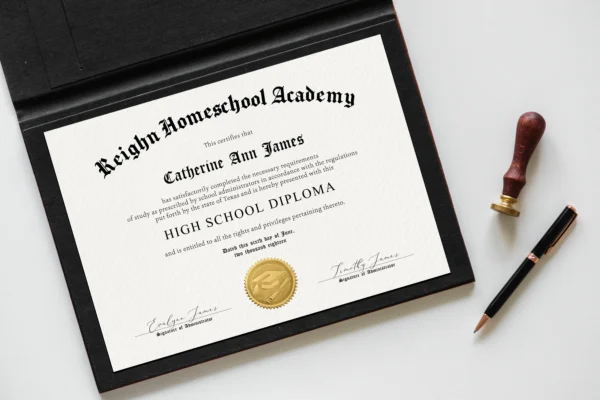
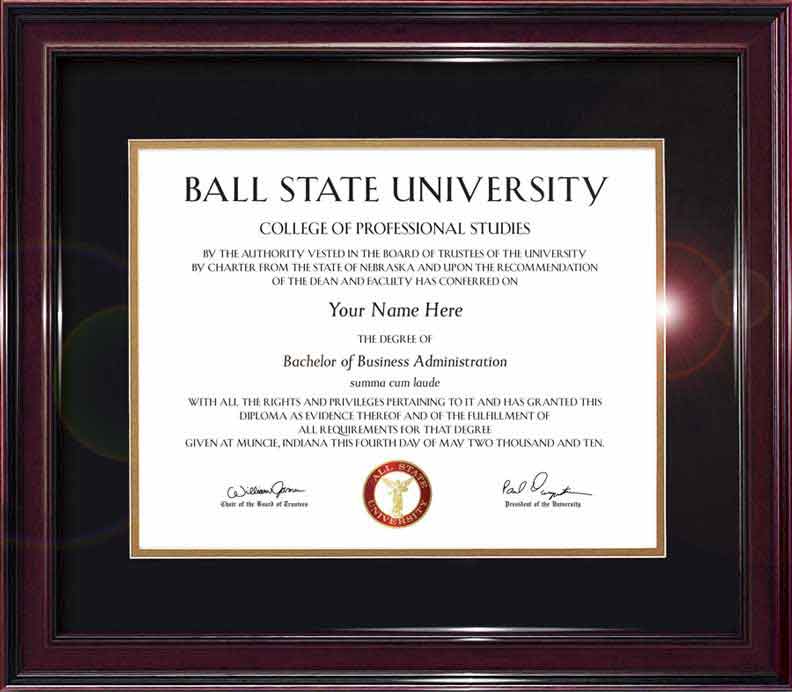
- Institution name and insignia. The full legal name of the school, often with a crest, coat of arms or the founding year, set in the largest type on the page.
- The conferral statement. A formal sentence stating that the trustees, regents or faculty have conferred the degree. Many schools still use the traditional phrasing "has conferred upon" or "be it known that"; a few older institutions print this line in Latin.
- The graduate's name. Printed in a script or calligraphic face, exactly as it appears in the student record.
- The degree and, often, the major. "Bachelor of Science", "Master of Business Administration", and so on. Some schools print the major or concentration; many print only the degree and leave the major to the transcript.
- Honors, where earned. Cum laude, magna cum laude or summa cum laude, either on its own line or folded into the degree line.
- The date of conferral. Written out in full ("the fifteenth day of May, two thousand twenty-six") or as a standard date, plus the city and state of the campus.
- Seal and signatures. The institutional seal — embossed, foil-stamped or printed in color — and two to four signatures: typically the president or chancellor, the provost or dean of the relevant college, and the chair of the board or the school's records officer.
If you are comparing a diploma against a photo of a classmate's, these seven elements are the checklist. The same checklist is what we work from when we build a replica (more on that below).
Size: 8.5×11 is common, but far from universal
There is no national standard for diploma size. Many public universities issue an 8.5×11-inch (letter) diploma; a large number of private colleges and most law, medical and doctoral programs use 11×14 inches; and a handful of institutions use 11×17 or a custom size. Schools occasionally change size when they redesign, so a 1998 diploma and a 2024 diploma from the same university may not match. The practical consequence is that a frame bought "for a diploma" is not guaranteed to fit — measure first.
Paper: heavy, textured, and usually not white
Diplomas are printed on cover-weight stock, noticeably stiffer than the paper in a printer tray. Two finishes dominate: a smooth, slightly off-white "natural" cover stock, and parchment-style stock with a mottled, aged look. Both are chosen because they take embossing and foil well and resist yellowing. Paper manufacturers grade these sheets by basis weight; 65 lb cover stock, for example, is roughly twice the thickness of standard 24 lb office paper (Neenah Paper's guide to paper types explains the cover-versus-text distinction). Our standard stock for college and university replicas is #65 Cougar cover, which sits squarely in this range.
Typography and layout
Most diplomas mix three typefaces: an engraved or Old English face for the institution name, a Roman serif for the conferral text, and a script face for the graduate's name. The spacing is deliberate — centered lines, generous margins, and a fixed vertical rhythm so that every diploma printed that year lines up with the last. This is the part that gives a replica away when it is done badly: a font that is "close" rather than correct, or a line that sits a few millimeters too high, is visible even to someone who has never seen the original.
The seal
The seal is the institutional emblem, and schools produce it in one of three ways. An embossed seal is pressed into the paper so the design stands up in relief with no ink. A foil seal is a gold or silver metallic disc, sometimes embossed as well. A printed seal is reproduced in one or more ink colors as part of the main print run. Many schools combine two of these — a printed seal with a small embossed state seal, for instance. Position is consistent within a school: bottom center, or bottom left beside the signatures.
Signatures
Signatures on modern diplomas are almost always pre-printed facsimiles rather than wet ink; a university graduating 8,000 students cannot have its president sign each one. Each signature sits above a printed title ("President", "Dean of the College of Engineering", "Secretary of the Board"). The number and arrangement of signature lines is one of the most school-specific details on the page.
How the real diploma is produced — and how a replica is built from it
Schools commission diplomas from a small number of specialist printers and reorder on the same template year after year; if a graduate needs a replacement, the records office orders it from the same template (see, for example, the official diploma pages of the University of California, Berkeley and the University of Michigan). That consistency is what makes an accurate replica possible.
A Perfect Match Diploma starts from the school's actual layout rather than a generic template: the wording, fonts, spacing, seal placement and signature block follow the design the school uses, and your name, degree, major and graduation date are set into it. Seals and crests are recreated as closely as the law allows, with copyrighted artwork adjusted slightly to stay on the right side of copyright. The document is printed on #65 Cougar cover in 8.5×11, 11×14 or A4, with a color, gold-foil or embossed seal and either our in-house facsimile signatures or blank lines for you to sign. If you want to see the level of detail before deciding, a few digital samples are available on request for any associate, bachelor's, master's or doctorate design; for a bachelor's-level document the Perfect Match bachelor's degree page shows the options.
Two things a replica does not reproduce: the school's record behind the document, and any security feature that only the issuing school can verify. A replica is a novelty document for display, gifts, props and replacing a lost original on your wall. It is not a credential, and we do not make documents intended to be passed off as one.
Related reading
- What does a high school diploma look like? — the high school version of this guide.
- Replica vs original diploma: differences and uses — where a replica matches the original and where it cannot.
- Raised seals and design quality on novelty diplomas — how the seal is produced.
Frequently asked questions
Do all college diplomas list the major?
No. Many universities print only the degree ("Bachelor of Arts") and leave the major to the transcript. Others print both. A replica follows whichever convention the school actually uses.
Is the signature on a diploma real ink?
Usually not. Modern diplomas carry pre-printed facsimile signatures. A small number of colleges still hand-sign, typically for very small graduating classes.
What size frame do I need?
Measure the document. Letter-size (8.5×11) and 11×14 are the two most common college diploma sizes in the US, but schools vary, and some have changed size over the years.
Sources
- University of California, Berkeley — Diplomas (official page)
- University of Michigan — Diplomas (official page)
- Neenah Paper — Paper 101: Different paper types for printing