"Fake Diploma With Verification": What It Really Means
19
OCT
"Fake Diploma With Verification": What It Really Means
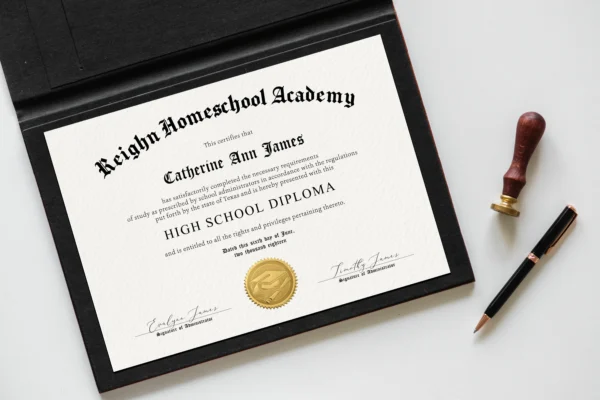
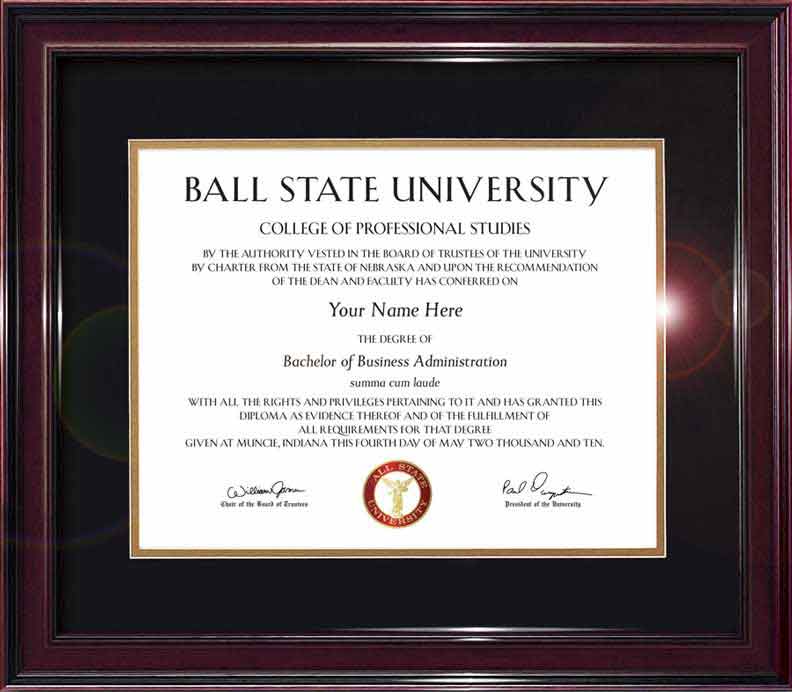
Search for a novelty diploma and you will see sellers advertising "fake diplomas with verification," "fake degrees with verification service" or "GED with verification." The phrase sounds like a feature. It is a warning sign. This article explains how real credential verification works, what a "verification service" attached to a novelty document actually is, why we do not offer one, and what a replica legitimately can and cannot do.
How real verification works
When an employer, licensing board or graduate school verifies a degree, they do not look at the diploma. They check the record behind it, through one of three routes:
- The school itself. The records office confirms, from its own database, that the person graduated, with which degree and when.
- The National Student Clearinghouse. Most US colleges report enrollment and degree data to the Clearinghouse, and employers and screeners query it directly (education verifications).
- A background-screening company that does one of the above on the employer's behalf.
Each route ends at the institution's record. A document, however well printed, is never the thing being verified.
What a "verification service" for a novelty diploma really is
Since the seller cannot change a school's records, a "verification service" can only be one of the following:
- A website or phone number operated by the seller (or a shell "university") that answers "yes" when someone calls to check. This is a fraud tool, and it is the mechanism the Federal Trade Commission describes in its guidance on fake degrees (FTC: avoid fake-degree burns).
- An unaccredited "university" that exists only to issue and "verify" its own degrees — the diploma-mill model described by the US Department of Education.
- A promise with nothing behind it.
In every case the purpose is the same: to help a document be passed off as a credential it is not. That is the line between a novelty replica and fraud, and it is why "with verification" should make you close the tab.
Why we don't offer it
A replica from us is a novelty document for display, gifts, props and replacing a lost original on the wall. It reproduces the look of a diploma; it does not and cannot carry a record. Offering "verification" would mean either lying to a third party or pretending an institution exists, and we do neither. Our policy is written down on Things We Can't Do: no verification services, no documents for institutions or professions where misuse causes direct harm (medical, aviation, maritime), and no documents intended for misrepresentation. The Perfect Match Diploma page says the same in its FAQ — it is not a real diploma, and we are not affiliated with any institution.
What a replica legitimately does
- Replaces the look of a lost or damaged original for framing, while (or instead of) waiting for the school's official replacement.
- Serves as a gift, a prop for film and theater, a retirement or graduation joke, a wall piece.
- Matches the school's actual design closely enough to satisfy the eye — but not a records check.
How a trained eye tells a replica from the original is covered in fake vs real diplomas: 7 differences you can check, and the employer's side of the process is in how employers check university degrees. The ethics of where novelty documents are and are not appropriate are in ethical uses of novelty diplomas.
Red flags, in one list
- "Verification" or "verifiable" anywhere in the offer.
- A "university" you cannot find in the CHEA or Department of Education databases.
- A degree delivered in days with no assessed work.
- Claims that the document is "legal to use for employment."
- No written statement of what the seller will not do.
What happens when a document is checked
Most verification follows the same sequence, and understanding it explains why no printed document can be "verified":
- The candidate supplies the claim — school, degree, major, year — on an application or consent form.
- The screener queries the record. For most US colleges this is an automated query to the National Student Clearinghouse, which returns the enrollment and degree data the school itself reported. For schools not in the Clearinghouse, the screener contacts the records office directly.
- Discrepancies are flagged, not resolved by looking at paper. If the record does not match the claim, the candidate is asked to explain; a diploma is rarely even requested, and when it is, it is used as a lead for the records check, not as proof.
- Licensing boards add an accreditation check: the institution must appear on the Department of Education or CHEA lists, or the degree is not counted.
At no point in that sequence does anyone call a number printed on the seller's website. A "verification service" can only intercept the process if the screener is careless enough to use the seller's contact details instead of the school's — which is exactly what the Federal Trade Commission warns employers not to do.
If you already bought a document "with verification"
You own a printed replica attached to a fraud tool. The replica itself is no different from any other novelty document and can be framed or kept as a prop. The danger is in the use: presenting it to an employer, a school or a licensing body is misrepresentation, and the "verification" line does not change that — it makes it worse, because it shows intent. Do not list the degree on a résumé, do not give the seller's contact details to anyone, and if the "university" named on the document is a real institution, be aware that some schools pursue people who present forged documents in their name.
The honest version of the same request
People who search for "with verification" usually want one of two things: a document that looks right, or a credential that works. The first is what a novelty replica provides — a Perfect Match Diploma built from the school's design, printed on cover stock with the seal and signatures in place, for the wall. The second can only come from a school, through enrollment or through an official replacement of a degree you actually earned. Nothing bridges the two, and any seller who says otherwise is describing fraud.
Frequently asked questions
Can a novelty diploma pass a background check?
No. Background checks query the school's records or the National Student Clearinghouse, not the paper.
Is it illegal to own a novelty diploma?
Owning or displaying a novelty document is not the problem; using it to obtain a job, license or benefit is, and laws in several states address exactly that.
Why do some sellers still advertise verification?
Because the phrase sells. It also identifies the seller as one operating outside the novelty category.
Sources
- National Student Clearinghouse — Education Verifications
- Federal Trade Commission — Avoid Fake-Degree Burns by Researching Academic Credentials
- US Department of Education — Diploma Mills and Accreditation