How to Frame and Display a Diploma: Sizes, Mats, Glass
06
NOV
How to Frame and Display a Diploma: Sizes, Mats, Glass
Framing a diploma well comes down to four decisions: a frame sized to the document (not "a diploma frame" — the actual measurement), a mat that keeps the paper off the glazing, glazing that filters UV, and a mounting method that does not glue or tape the diploma itself. Get those right and the document will stay in good condition for years. This guide covers each decision for the three common diploma sizes, plus how to protect a foil or embossed seal and where to hang the finished piece.
1. Measure first
Diplomas come in three main sizes — 8.5×11 inches, 11×14 inches and A4 (8.3×11.7 inches) — and a frame sold as a "diploma frame" may fit only one of them. Measure the document's exact width and height before buying. If you ordered a replica, the size you chose on the Perfect Match Diploma order form is the size to frame; the differences between the three are explained in diploma sizes, paper and seals.
2. Choose a mat
A mat does two things: it adds a border that makes the document read as a framed piece rather than a page behind glass, and it holds the paper away from the glazing so foil and embossing never touch the glass. Typical mat widths are 2–3 inches on each side for a letter-size diploma and 3–4 inches for 11×14. Use acid-free (archival) mat board; ordinary paper-based mat board can yellow the diploma's edges over the years. A double mat — a thin inner mat in a school color under a wider neutral outer mat — is the classic diploma look.
| Diploma size | Mat opening | Typical mat width | Finished frame (outside of mat) |
|---|---|---|---|
| 8.5×11 in | 8.25×10.75 in (overlaps the edge by ⅛ in) | 2.5–3 in | About 13.5×16.5 in |
| 11×14 in | 10.75×13.75 in | 3–3.5 in | About 17×20 in |
| A4 | 8×11.5 in | 2.5–3 in | About 13×17 in |
3. Pick the glazing
Standard glass protects from dust and fingerprints but not from light. Paper and printing inks fade under ultraviolet light, and foil seals can dull; a diploma hung opposite a window can show it over time. UV-filtering acrylic or conservation glass blocks most of that. Acrylic is lighter and shatter-resistant (useful in an office with foot traffic); conservation glass is scratch-resistant and has no static. Either is a modest upgrade over plain glass and the one that matters most for longevity. For how cover and text papers differ, see Neenah's guide to types of paper.
4. Mount without damaging the document
Never glue, spray-mount or tape a diploma to the backing board. Use archival photo corners or acid-free hinging tape on the back edge only, so the document hangs freely and can be removed without a mark. Many frame shops offer "float mounting" that shows the paper's edge; it works well for parchment-style stock. Keep the backing board acid-free as well.
Protecting the seal
Embossed and foil seals are the most fragile parts of a diploma. The mat keeps them off the glass; beyond that, avoid pressing the document face-down on any surface, keep it out of damp rooms (foil lifts with humidity), and never try to flatten an embossed seal that has been dented — the relief is pressed into the fibers and cannot be restored. If a seal is already damaged on an original, a replica built from the school's design, with a new seal, gives you a presentable wall copy while the original stays safely stored. The seal options are described in raised seals and design quality.
Where to hang it
- Out of direct sunlight, even with UV glazing.
- Away from heat and humidity — not above a radiator, not in a bathroom.
- At eye level: the center of the frame at about 57–60 inches from the floor is the gallery standard, lower if it hangs above a desk.
- Grouped: a diploma, a transcript or certificate and a photograph in matching frames read as one display. Why people keep a diploma on display at the office covers the office case; for a wall piece that marks an achievement without the original, see realistic diplomas and custom novelty diplomas for display and gifts.
Frame styles that suit a diploma
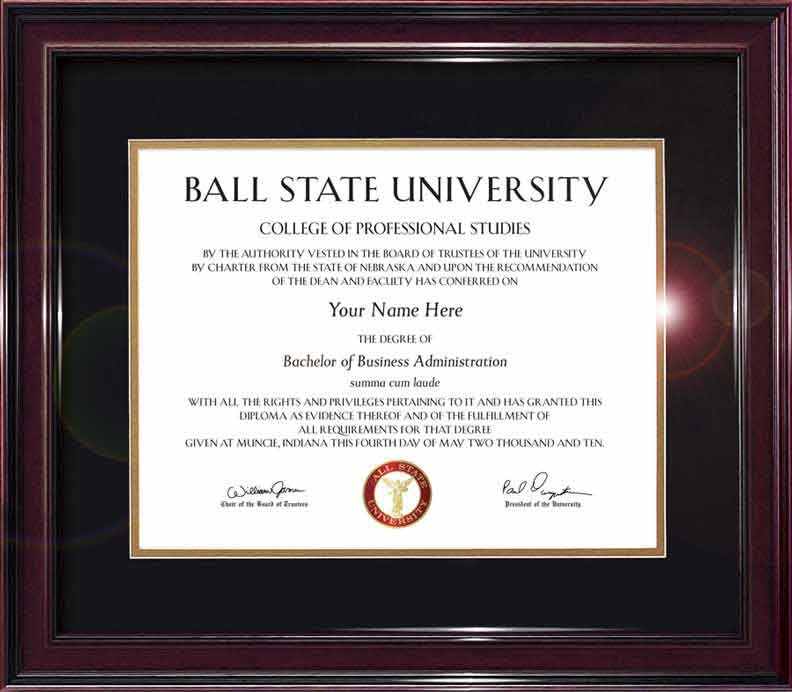
Diplomas are formal documents, and the frames that suit them are plain: a narrow to medium molding in black, dark walnut, cherry or mahogany, or a slim gold or silver metal profile. Ornate frames fight the document's own border and seal. The classic combination is a dark wood frame, a double mat with a thin colored inner mat, and a plain outer mat in off-white or cream. Pre-cut diploma frames in those finishes are sold for the three standard sizes; a frame shop can match a custom size or build a wider mat to bring a letter-size document up to the same outside dimension as an 11×14 piece beside it.
Step by step
- Measure the document and choose a frame whose mat opening is about an eighth of an inch smaller than the document on each side.
- Clean the glazing on both sides and let it dry fully; dust under glass is permanent until you reframe.
- Lay the backing board flat, position the document, and fix it at the top edge only with archival hinging tape or at the corners with photo corners.
- Place the mat over the document, check the opening is centered, then the glazing, then the frame.
- Secure the back with the frame's points or clips, add a dust cover if the frame is wood, and attach the hanging hardware at the correct height.
- Hang on two hooks rather than one so the frame stays level.
Caring for the framed piece
Dust the frame and glazing with a dry cloth; never spray cleaner directly onto glass, where it can run under the edge and wick into the mat. Every few years check the back for signs of moisture or insect activity. If the document ever needs to come out — for a reframe or a move — the hinge-only mounting means it lifts free without damage. For a replica that is being used as the display copy while the original stays in storage, the same care applies.
Frequently asked questions
Can I frame a diploma without a mat?
You can, but the document then touches the glazing; foil and embossing can stick or dull over time. A mat or spacer is strongly recommended.
Should I laminate a diploma?
No. Lamination is permanent, crushes embossed seals and cannot be undone. Frame it instead.
Is a replica worth framing like an original?
Yes — the point of a replica is the wall, and the same framing rules apply. The Perfect Match Certificate and diploma replicas are printed to be framed.
Sources
- Neenah Paper — Paper 101: types of paper
- Diploma Makers — Perfect Match Diploma (sizes and seal options on the order form)