Diploma vs Degree vs Certificate: What's the Difference?
30
OCT
Diploma vs Degree vs Certificate: What's the Difference?
A degree is an academic award conferred by a college or university after a program of study — associate, bachelor's, master's or doctorate. A diploma is the document that certifies an award; in the US the word usually means the high school document, while the paper a university hands a graduate is also called a diploma even though what it certifies is a degree. A certificate certifies completion of a shorter, narrower program — a training course, a professional specialization, a skills track — and is not a degree. This guide sets out the differences in time, issuer, level and what each document looks like.
The three in one table
| Degree | Diploma (high school) | Certificate | |
|---|---|---|---|
| Awarded by | Accredited college or university | High school, district or state board | College, training provider or professional body |
| Typical length | 2 years (associate) to 4+ (bachelor's); 1–3 more for graduate degrees | 4 years of secondary school | Weeks to about a year |
| Level | Post-secondary | Secondary | Varies: entry-level to post-graduate |
| Scope | Broad: general education plus a major | Broad: state-mandated curriculum | Narrow: one subject or skill |
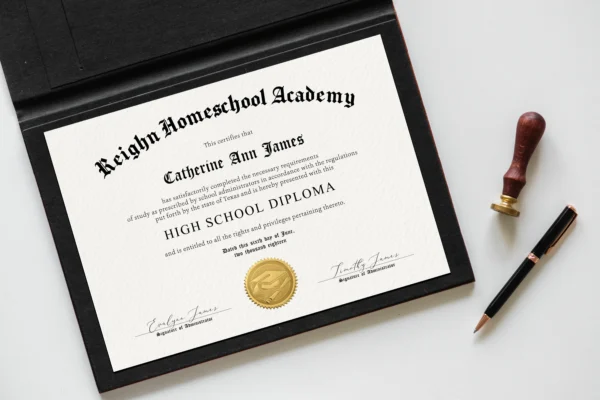
| The document | A diploma naming the degree | A diploma naming the school and program | A certificate naming the course or competency |
| Usually required for | Graduate study, licensed professions | College admission | Depends on the field; often stacks with a degree |
Degrees
Degrees are tiered. An associate degree (AA, AS, AAS) is typically two years at a community or junior college. A bachelor's degree (BA, BS and variants) is four years at a college or university. Master's degrees and doctorates follow. The accreditation of the awarding institution is what gives a degree its standing — the Department of Education's guidance on diploma mills is the reference for why an unaccredited "degree" is not one. The individual degree types are covered in the different types of degrees in college.
Diplomas
The word does double duty. In everyday US usage "diploma" means the high school diploma — the document that certifies you graduated from secondary school. At the college level the diploma is the ceremonial document that certifies a degree; nobody says they "earned a diploma" from a university, but the paper on the wall is still a diploma. Outside the US, "diploma" often names a specific post-secondary qualification below a bachelor's degree (a two- or three-year program in Canada, Australia or the UK), which is a frequent source of confusion on international résumés. The high school document and its GED and HiSET equivalents are explained in what a high school diploma is called, the GED document in what a GED certificate looks like, and the anatomy of the US college version in what a college diploma looks like.
Certificates
Certificates certify completion of something shorter and narrower than a degree. Three families are common:
- Academic certificates from colleges: an undergraduate or graduate certificate in a subject, often 12–30 credits, sometimes stackable toward a degree.
- Vocational and training certificates: a trade program, a software course, a safety or compliance class.
- Professional certifications: awarded by a professional body after an exam (the document is a certificate; the status is a certification). These are earned, renewed and sometimes revoked by the issuing body; degrees, by contrast, are recorded by the school and, for most US institutions, in the National Student Clearinghouse.
"Which one is higher?"
In the US, a degree outranks a high school diploma, and a certificate is not on the same ladder at all — it sits beside degrees rather than above or below them. A graduate certificate can require a bachelor's degree to enroll; a vocational certificate may require only a high school diploma. The question that matters is not rank but what the credential is for.
The novelty versions
Each of the three has a novelty replica counterpart: a Perfect Match Diploma for degree documents, a high school diploma replica, and a Perfect Match Certificate for certificate-style documents. All three are display documents — for walls, gifts and props — built to match the look of the original, with no claim to the credential behind it. The full range is listed in types of novelty diplomas you can order, and the degree-by-degree sequence in the various novelty degrees in order.
Who keeps the record of each one
The three credentials are recorded in different places, which is a practical reason to keep the terms straight. A degree is recorded by the school's records office and, for most US institutions, the National Student Clearinghouse; its standing depends on the school's accreditation. A high school diploma is recorded by the school or district — there is no national database for high school records. A certificate is recorded by whoever issued it: the college for an academic certificate, the training provider for a course, the professional body for a certification. A request for "a copy of your degree" and a request for "a copy of your certificate" are requests for different documents from different custodians.
What the documents look like
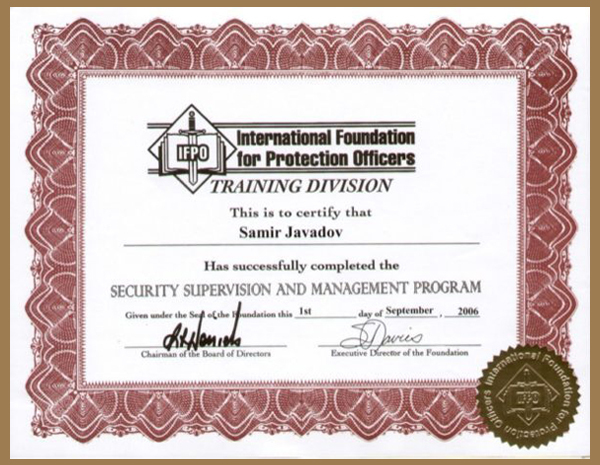
A university diploma carries the institution's name and crest, a conferral statement, the graduate's name, the degree, the date and two to four signatures over a seal, on cover-weight stock in letter or 11×14 size. A high school diploma uses the same format with the school and district in place of the university and the graduation statement in place of the degree. A certificate is more varied: usually letter size, often with a decorative border, the name of the program or competency in place of a degree, and the signature of a program director or examiner. The full anatomy of the college version is covered above; the sizes, paper and seal types are a subject of their own.
Common mix-ups
- "I have a diploma in nursing." In the US this usually means a hospital-based nursing diploma program — a real pre-licensure credential that is neither a degree nor a high school diploma.
- "Graduate certificate" vs "graduate degree." The certificate is a short, focused program; the degree (a master's) is longer and broader. Both are post-baccalaureate.
- "Certified" vs "certificate." A certificate of completion shows you attended; a certification shows you passed an assessment and maintain the status.
- "Honorary degree." Awarded without study, by a real institution, as an honor; it is not a credential and is normally not listed as one.
Frequently asked questions
Is a diploma a degree?
Not in the US. A diploma is a document; a degree is an academic award. A university diploma certifies a degree; a high school diploma does not.
Is a certificate worth less than a degree?
It is worth something different: narrow, fast and specific. Many professionals hold both.
What does "diploma program" mean on a foreign résumé?
Usually a post-secondary qualification below a bachelor's degree, common in Canada, Australia, the UK and India.
Sources
- US Department of Education — Diploma Mills and Accreditation
- National Student Clearinghouse — Education Verifications